what is an open bite?
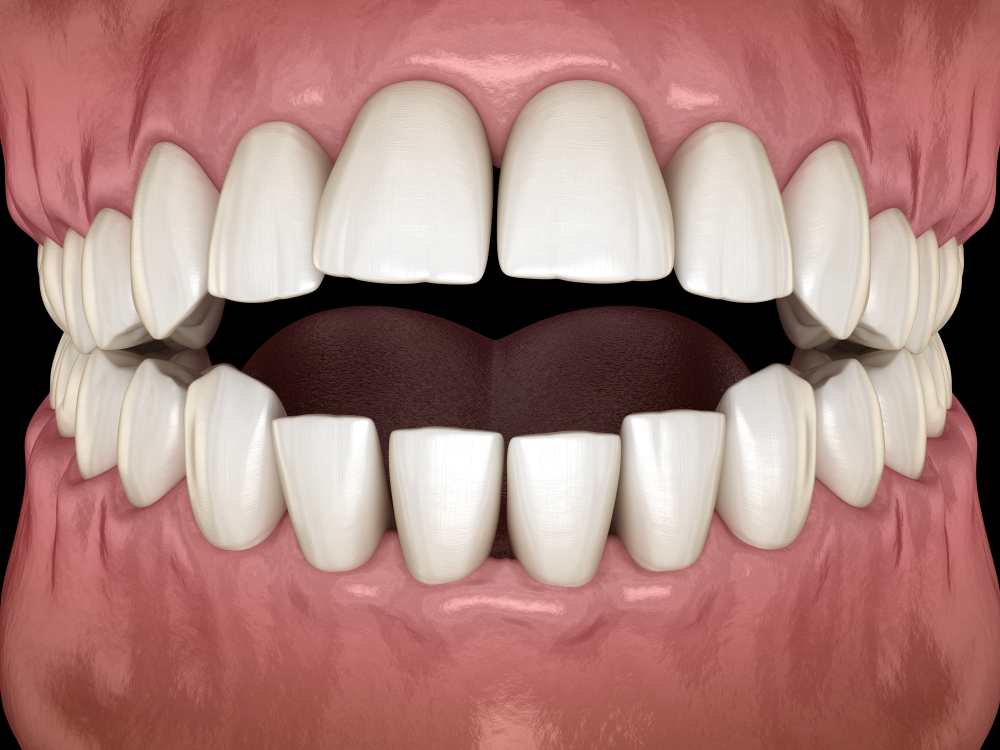
Think about how your top and bottom teeth don’t touch when you close your mouth. There’s a space between your teeth, like they’re trying to touch but not quite. If you want to use the fancy term, dentists call that an open bite malocclusion.
There are two main kinds:
1. Open Bite in the Front Teeth
This one comes up all the time. When you bite down, your front teeth don’t touch, which makes a pretty obvious gap in the front.
2. Open Bite in the Back Teeth
Not as often. Your back teeth don’t touch here, so you do most of your chewing with your front teeth.
Both types are called “malocclusion,” which means that your bite isn’t lining up the way it should.
But what really causes an open bite?
It doesn’t just happen for no reason. It usually comes from habits, how your face grows, or sometimes health problems.
The main reasons are:
1. Habits from when you were a kid
Many people get open bites when they are young. Sucking your thumb, holding onto a pacifier for too long, sucking on your lips, or pushing your tongue between your teeth when you swallow can all mess up the growth of your jaw and keep your teeth from lining up.
2. Breathing through your mouth
Breathing through your mouth a lot, maybe because of allergies or a stuffy nose, can actually change the shape of your face. You could get a longer face, weaker mouth muscles, and yes, an open bite.
3. Genetics (Skeletal Open Bite)
Sometimes, it’s just how you are. Some people’s jaws grow more up and down than side to side. This type of open bite is harder to fix and may need surgery.
4. How to Hold Your Tongue
If your tongue sticks out too far in front of or behind your teeth, it can keep them apart. That’s a big reason why some adults have open bites.
5. Missing teeth or teeth growing in the wrong spot
When teeth come in crooked or some just don’t show up at all, the rest start moving around to fill the space. That’s how gaps happen.
6. Braces or other dental tools
Sometimes, braces and other orthodontic treatments can cause a small open bite as a side effect.
7. Less common causes
Now and then, things like TMJ issues, mouth injuries, or odd swallowing habits lead to an open bite. But honestly, that’s pretty rare.
How to Tell if You Have an Open Bite ?
Ever notice your front teeth don’t meet when you bite down? Maybe you struggle to take a bite of pizza or a sandwich, or your smile seems a bit longer than usual. Sometimes, people with open bites say their speech sounds a little “airy” or unclear. You might catch your tongue peeking out when you smile, or just feel like your mouth doesn’t close naturally, even when you’re relaxed.
A lot of people with open bites also find it tough to pronounce “S” or “Z” the right way. And honestly, some just make light of it: “I smile with my mouth open, but my teeth are waving from across the room.”
What Happens if You Ignore an Open Bite?
Leaving an open bite untreated brings more headaches than you might think:
- Speech problems
- Trouble chewing or biting food
- Extra stress and wear on your teeth
- Jaw pain (TMJ issues)
- Sore gums
- A hit to your self-confidence
It’s not just about looks—an open bite can mess with everyday life.
Types of Open Bite
Here’s a quick breakdown:
| Type of Open Bite | Description |
|---|---|
| Anterior Open Bite | Front teeth won’t touch when you close your mouth. |
| Posterior Open Bite | Back teeth stay apart when you bite down. |
| Skeletal Open Bite | Caused by the shape or structure of your jawbone. |
| Dental Open Bite | Due to the position or alignment of your teeth. |
| Functional Open Bite | Linked to habits like thumb sucking or tongue thrusting. |
| Lateral Open Bite | Only one side of your mouth doesn’t close properly. |
How to Fix an Open Bite (Kids, Teens, and Adults)
The upside? Open bites can be fixed, no matter your age or how bad it seems.
1. Braces for Open Bite
Braces are the go-to. They move teeth where they should be, close gaps, and get your bite lined up.
2. Clear Aligners (Invisalign)
Great for mild or moderate cases. They’re nearly invisible, comfy, and can help train your tongue to rest where it should.
3. Myofunctional Therapy
Think of this as exercise for your tongue and mouth muscles. It helps fix tongue thrust, mouth breathing, and swallowing issues. If you’re hoping to avoid braces, this is worth exploring.
4. Behavioral Habit Correction
Mostly for kids—think stopping thumb sucking, cutting down on pacifier time, and teaching proper nose breathing.
5. Elastics (Rubber Bands)
Orthodontists use these to help pull your teeth together and close the bite.
6. Jaw Surgery (Orthognathic Surgery)
For severe or skeletal open bites in adults, surgery can do what braces can’t. It moves your jaw, balances your face, and can totally change your before-and-after look.
7. Veneers for Open Bite
Veneers can make your teeth look better, but don’t expect them to fix your bite. They’re purely cosmetic.
Can You Fix an Open Bite Naturally? (Home Tips)
Natural fixes won’t do much for a severe open bite, but for small issues, they help:
- Breathe through your nose, not your mouth
- Keep your tongue resting on the roof of your mouth
- Don’t chew on pens, nails, or random objects
- Try not to sleep on your stomach
- Practice tongue exercises
These work best for mild or slight open bites, especially when tongue thrust is the cause.
Open Bite in Kids: The Thumb Sucking & Pacifier Link
If a child keeps sucking their thumb or using a pacifier past age four, their teeth might start moving forward, causing an anterior open bite. The sooner they stop, the easier it is to fix.
Should Your Front Teeth Touch When You Bite?
Yes, your front teeth are supposed to meet gently when you bite down. If there’s a gap, that’s a sign of open bite.
Open Bite: Before and After Braces
Before treatment, you’ll probably see a gap, have trouble speaking clearly, and struggle to bite into food. After braces (or other treatment), your teeth meet, your face looks more balanced, and your confidence gets a big boost.
Conclusion
Living with an open bite can be a pain—your smile feels off, your teeth just don’t fit, and sometimes your mouth won’t stay closed. But here’s the thing: you can fix it, no matter your age.
Braces, aligners, surgery, or even some home-based changes—there’s a way forward. If you’re wondering, “How do I fix my open bite?” start with an orthodontic checkup. The earlier you tackle it, the easier it is to fix.
Medical Disclaimer
This article shares information for educational purposes—it’s not medical advice, diagnosis, or treatment. If you have health questions or concerns, talk to a qualified healthcare professional. Don’t ignore or put off professional advice because of anything you read here.