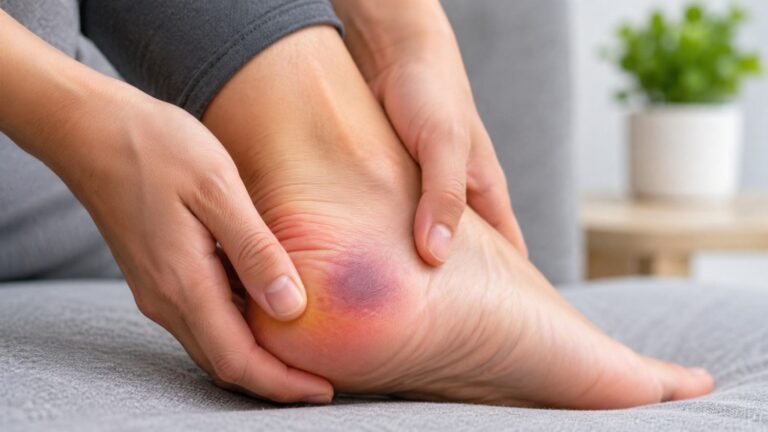
A small, painful bump on your little toe can make walking, standing, and wearing shoes miserable. If you’ve noticed a hard patch of skin on the outside of your pinky toe, it may be a corn.
Corns there usually come from repeated pressure or friction: tight shoes, a narrow toe box, or the way your toes sit against each other. Over time the skin thickens and hardens, and a small central core sometimes forms that hurts when you press it.
Mild corns often settle down once the pressure comes off. Shoes with room in the toe box, padding over the sore spot, and basic foot care handle most of them.
What is a pinky toe corn?
A pinky toe corn is a small, concentrated patch of thickened skin on or around your fifth toe. It forms because skin builds extra layers to protect itself from rubbing. Keep the pressure in the same spot and those layers compact into a hard bump.
The outside of the little toe is a common site because that edge rubs against the inside of a shoe.
Signs to look for:
A small, round bump on the little toe
Hard, dry, or yellowish skin
Tenderness when you press the area
Pain in tight shoes
A small, firm center ringed by thickened skin
Some corns barely bother people. Others hurt enough to make walking difficult.
What causes a corn on the pinky toe?
Repeated pressure and friction sit behind most of them. A few things put that pressure there.
1) Tight or narrow shoes
A narrow toe box squeezes the toes together, which pushes the little toe into the shoe or into the fourth toe. High heels, pointed styles, and badly fitted dress shoes make it worse.
2) Shoes that are too loose.
Your foot slides inside the shoe, and the little toe rubs against the lining. A rough seam in the same place is enough to do it.
3) Toe shape
Long pinky toes, curled toes, and toes that bend inward all press against footwear. Hammertoes push the joints into the shoe and can produce a hard corn on top or along the side of the toe.
4) A bony bump
A bunionette, also called a tailor’s bunion, is a bony prominence near the base of the fifth toe. It makes the outer edge of the foot rub, which brings redness, discomfort, and thick skin. A corn that keeps returning in exactly the same spot often points to a bone or toe-position problem underneath.
5) Time on your feet
Healthcare workers, retail staff, runners, and anyone who stands or walks for hours puts repeated pressure on their toes, especially in uncomfortable shoes. Runners can also experience common foot injuries when their footwear or training habits put extra stress on their feet.
Corn or callus?
Both come from pressure. The shape is what separates them. A corn is small and round, covers a smaller area, and may have a hard core that hurts when pressed. A callus covers a broader, flatter patch and tends to develop more gradually.
| Feature | Corn | Callus |
|---|---|---|
| Appearance | Small and round | Larger and flatter |
| Skin texture | Hard and concentrated | Thick and rough |
| Center | May have a hard core | Usually no central core |
| Pain | Often painful with direct pressure | Usually less painful |
| Common location | Sides and tops of toes | Soles and heels |
A callus on the little toe can show up where a shoe rubs the same spot. Both tend to improve once you reduce the pressure.
Recognizing a painful corn
Symptoms depend on the size of the corn and how much pressure the spot takes. The thickened skin feels harder than the skin around it, and pressing the center can be tender or sharply painful. The surrounding skin may look red from shoe friction. Each step may load the area, and the corn itself often looks rough, flaky, or yellowish. A corn shouldn’t bleed or produce pus. Bleeding, swelling, spreading redness, or discharge calls for medical advice. If your toe pain started after an injury, it may be a toe sprain rather than a corn.
How to remove a corn from your little toe safely
Start with the pressure. For healthy adults with an uncomplicated corn, gentle home care may be enough. People with diabetes, poor circulation, or reduced sensation in their feet should not remove corns themselves.
1) Choose comfortable shoes
This is the step that matters most. A wide toe box gives the little toe room to move naturally. Skip anything that squeezes your toes or presses directly on the corn.
2) Soak your feet in warm water
A short soak softens hardened skin. Fill a clean basin with comfortably warm water, soak for about 5 to 10 minutes, then dry your feet gently, including between the toes. Avoid hot water, especially if your feet have reduced sensation.
3) Use a pumice stone carefully
After soaking, a pumice stone can take off a little dead, thickened skin. Rub gently over the surface rather than pressing hard. Don’t try to remove the whole corn in one go, and stop if you feel pain, irritation, or bleeding. Skip the pumice stone entirely if you have diabetes, poor circulation, or reduced foot sensation, unless a healthcare professional has told you otherwise.
4) Apply a suitable moisturizer
A foot cream containing urea softens dry, thickened skin. Follow the product instructions. Keep thick creams out from between your toes, where trapped moisture causes other problems.
5) Use protective corn pads
Non-medicated pads cut the pressure and keep your shoe from rubbing directly on the spot. A silicone toe sleeve is another option. Make sure the pad doesn’t squeeze the toe or add friction of its own. Avoid medicated corn-removal products containing salicylic acid unless a professional advises them, particularly if you have diabetes or circulation problems.
Treating a hard corn on the pinky toe
A hard corn is trickier because of that dense central core. When it’s small and not badly painful, less friction and routine foot care may be enough. A deep or painful one usually needs a podiatrist, who can remove the excess hardened skin with sterile instruments. The procedure is called debridement.
Professional treatment may include removing the thickened outer skin, reducing the central core, recommending padding, assessing your footwear and walking pattern, and checking for toe deformities or bony pressure points.
The core is compacted dead skin cells. It is not a root growing into the foot. Never dig it out with a needle, blade, or nail clipper. You can damage healthy skin and cause an infection.
What is a soft corn between the toes?
Not every corn sits on the outside of the little toe. Some form between the fourth and fifth toes, and those are called soft corns. They often look white, pale, or rubbery because moisture gets trapped between the toes.
Common symptoms:
White or softened skin between the toes
Pain when the toes press together
Irritation while walking
Tenderness in closed shoes
Soft Corn Treatment
Treatment aims at friction and moisture. Wash your feet gently and dry between every toe. Keeping your feet clean and dry also helps prevent toe jam. Wear breathable shoes with room for your toes. Change damp socks when you need to. A silicone or foam toe separator can help. If the corn stays painful, ask a podiatrist about removal. Don’t cut or dig into a soft corn. Redness, swelling, or discharge means medical attention.
When to see a podiatrist
Home care doesn’t always do it. Book an appointment if:
- The corn is persistently or severely painful
- Walking becomes uncomfortable
- It keeps coming back
- The surrounding skin turns red or swollen
- There’s bleeding, pus, or an open wound
- It doesn’t improve with appropriate care
- You’re not sure the growth is a corn at all
Diabetes, poor circulation, or nerve damage means professional foot care instead of home removal. A professional can also tell a corn from a callus, a wart, or another skin or bone condition.
Preventing a corn from returning
Removing the hard skin is half the job. If the pressure stays, another corn follows.
- Give your toes room in the shoe
- Wear socks that fit and don’t bunch inside the shoe
- Pad the spots that rub against footwear
- Moisturize dry skin with a suitable foot cream
- Check your feet now and then for early thickening or irritation
- Ask a podiatrist about bent or overlapping toes that keep causing pressure
Frequently asked questions
Q. How do you get rid of corns on your pinky toe?
Start with comfortable shoes and a wide toe box. Non-medicated protective pads reduce friction. Gentle foot care may be enough for an uncomplicated corn, and painful or persistent ones may need professional removal.
Q. Why does my pinky toe have a hard bump?
It’s often a corn, brought on by repeated pressure from shoes. A bunionette or a wart can look much the same, so a doctor can confirm which one it is.
Q. Can I remove a pinky toe corn at home?
Some mild corns respond to gentle foot care and less pressure. Never cut, dig into, or aggressively scrape a corn. If you have diabetes or poor circulation, get professional treatment.
Q. Why does my corn keep coming back?
Usually because the source of the pressure is still there. Tight footwear, toe deformities, and bony prominences all keep the friction going.
Q. Can a pinky toe corn become infected?
A simple corn isn’t an infection, but damaged skin lets bacteria in. Redness, swelling, warmth, pus, or pain that keeps getting worse may be an infection, and that needs medical attention.
Q. How long does it take for a corn to disappear?
There’s no fixed timeline. A mild corn may improve gradually once the pressure is gone. Deeper or recurring corns may need a podiatrist.
Q. Are corn removal pads safe?
Non-medicated pads are generally useful for reducing friction. Pads containing salicylic acid can damage healthy skin and aren’t suitable for everyone. If you have diabetes or poor circulation, don’t treat corns yourself with these products unless a healthcare professional advises it.
Q. What should I do after a corn is removed?
Follow your podiatrist’s aftercare instructions. Wear comfortable shoes and protect the area from further rubbing. Watch for unusual redness, swelling, pain, or discharge.
Final Thoughts
A pinky toe corn is small, but it can make walking and wearing shoes genuinely unpleasant. Most uncomplicated cases respond to less pressure, better shoes, and careful foot care. Deep, painful, or recurring corns need a podiatrist, both to remove the hard skin and to find what keeps producing it. Take away the pressure and the corn has nothing to build on.
References
Medical Disclaimer
This article shares information for educational purposes—it’s not medical advice, diagnosis, or treatment. If you have health questions or concerns, talk to a qualified healthcare professional. Don’t ignore or put off professional advice because of anything you read here.