
Ever glance down and wonder why your feet look kind of purple instead of their usual color? It’s weird, right? You expect to see that normal pinkish tone, but sometimes your feet show up bluish or mottled. If this sounds familiar, you’re definitely not alone. Lots of people notice their feet turning purple at some point. Sometimes, it’s nothing to worry about. But other times, it can signal a health problem that needs attention. So what’s actually happening? And should you be concerned?
Let’s break down what causes feet purple, what it means, and when it’s time to check in with a doctor. By the end, you’ll know a lot more about your feet—and what to do if purple becomes your new normal.
What Makes Feet Turn Purple?
Seeing your feet turn purple can look scary, but the reasons behind it range from harmless to pretty serious. Here’s what’s most likely going on:
1. Poor Circulation
Honestly, this is the big one. When your blood isn’t flowing the way it should, your feet can start to look red, purple, or even blue. Usually, this kind of thing pops up if you’ve got something like peripheral artery disease (PAD) or Raynaud’s disease. Both of these make it tough for blood to reach your toes.
Keep an eye out for a few warning signs:
- Cold or numb feet
- Swelling
- Changes in color if you’ve been sitting or standing for a while
2. Raynaud’s Disease
Raynaud’s is a weird one. It messes with the blood flow in your fingers and toes, especially if you’re cold or stressed out. The blood vessels just clamp down, and suddenly your fingers or toes turn white, blue, or even purple.
What’s going on here?
- Blood isn’t getting to your toes like it should, so they lose that normal color.
- Sometimes blood pools in your fingertips or toes, which is why the color change looks so dramatic.
3. Cold Weather
If you’ve ever gone outside in freezing weather and looked at your toes afterward, you know the deal. Your body tries to keep your core warm, so it tightens up the blood vessels in your feet. That’s why your toes can turn purple or blue if you stay out in the cold too long.
What’s actually happening:
- Blood flow gets redirected away from your skin to keep your organs warm.
- After a while, your feet just look purple—it’s your body’s way of coping.
4. Blood Clots
Now we’re getting into the stuff you really don’t want to ignore. A blood clot can block blood flow in your foot, which makes the skin turn purple. Usually, you’ll also feel pain, swelling, or warmth near the spot. If you suspect a blood clot, don’t wait—see a doctor fast.
5. Venous Insufficiency
This one happens when the veins in your legs can’t push blood back up toward your heart the way they should. When blood pools in your feet and ankles, they swell and change color in strange ways. The bottoms of your feet can get dark red or purple.
Be careful of:
- Swollen ankles
- Strange purple or brown spots on your skin
- Your legs feel heavy or hurt
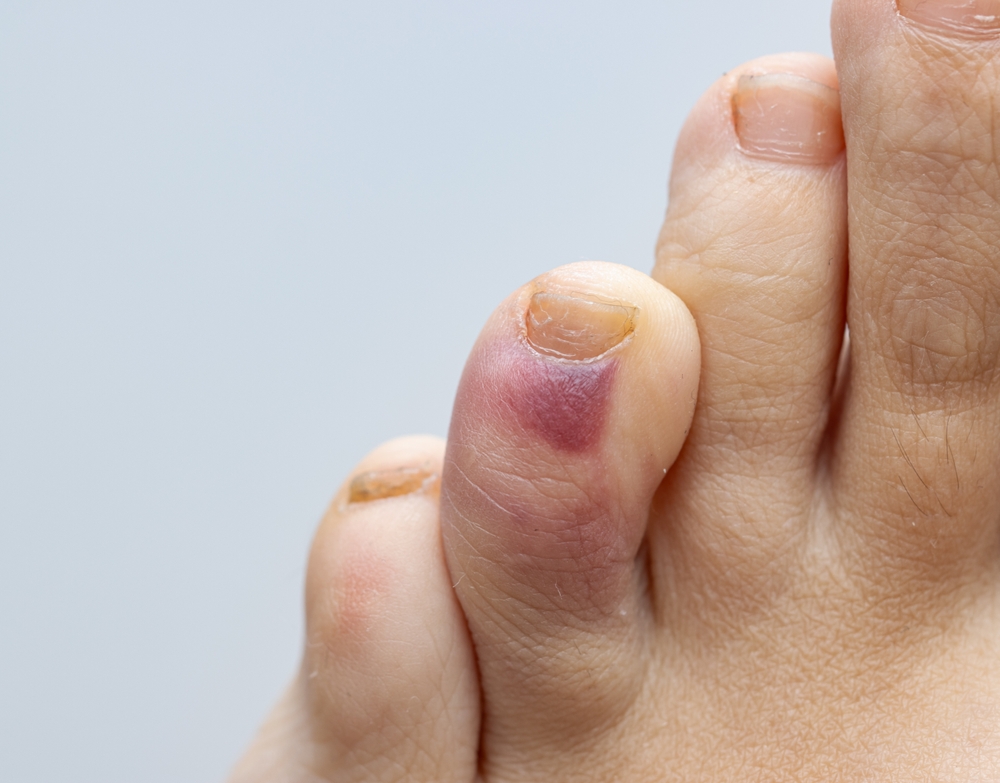
6. Injury or Trauma
Did you stub your toe or twist your ankle recently? That can absolutely turn your foot purple. It’s usually just bruising—blood has pooled under the skin where you got hurt.
Other Reasons Your Feet Might Look Purple
Yeah, most of the time it’s bad circulation or some health problem, but that’s not the whole story. There are times when your feet change color for other reasons:
Medications: Blood thinners like warfarin can make your feet look bruised or even a little purple.
Pregnancy: Your circulation can be messed up by the swelling and extra fluid, so don’t be surprised if your feet get puffy and purple.
Diabetes: If you have diabetes, nerve damage or bad circulation can make your feet turn purple, red, or blue.
Why do my toes turn purple when I sit or stand?
Have you ever looked down and seen your toes turn purple after sitting or standing for a while? Honestly, you’re not the only one. Most of the time, it’s just your blood not moving the way it should through your legs and feet. Circulation problems like venous insufficiency or peripheral artery disease can make blood pool in your lower body, especially when gravity’s doing its thing. That’s when you see the weird color change.
Stand up after sitting for a long stretch, and sometimes the blood rushes back to your toes, which can make them look even more purple for a moment. Most of the time, the color goes back to normal once you get up and move or prop your feet up for a bit.
What Can You Do?
- Try propping your feet up when you’re sitting. It gives your blood an easier route back to your heart.
- Move around often. Even a quick walk or a few stretches help keep things flowing.
When Should You Worry About Feet Purple?
Most of the time, purple feet aren’t a big deal. Maybe you’ve been in the cold, or you just sat too long. Sometimes, your body’s trying to tell you something important.
Watch out for these signs:
Severe pain: If your feet or toes hurt badly and turn purple, don’t wait around. That’s a sign something’s wrong—maybe a blood clot or a serious circulation problem.
Swelling: When your feet look puffy and purple, it could mean trouble with your veins or even your heart.
The color sticks around: If your feet stay purple even after you’ve warmed up or moved around, your circulation needs real attention.
You can’t move your foot or leg, and it’s blue or purple: That’s a big warning sign—don’t wait to see a doctor.
Spot any of these? Make an appointment with your doctor right away.
How to Get Your Blood Moving
If poor circulation’s behind your purple toes, there’s plenty you can do:
- Get moving. Walk, stretch, take the stairs—anything that gets your legs working helps push blood back up from your feet.
- Try compression socks. They gently squeeze your legs, which keeps blood from pooling in your feet.
- Keep your feet warm, especially in the cold. Socks and boots are your friends.
- Prop your feet up when you’re sitting.
- Eat well. Load up on fruits, veggies, whole grains, and lean proteins to keep your blood vessels healthy.
Conclusion
Purple feet can look scary, but most of the time, it just means your circulation needs a boost. If you notice pain, swelling, or the color sticks around, don’t ignore it—call your doctor. Paying attention to these changes and moving more can keep your feet healthier in the long run.
Worried or not sure what’s going on? Trust your gut and talk to a healthcare provider. Catching problems early makes a big difference.