Biting the inside of your lip seems like no big deal—until you actually do it. That sharp, annoying sting, the swelling, maybe a little blood, and then, for some reason, you keep hitting the exact same spot over and over.
If you’ve ever chomped your lip by accident, have a sore spot inside your mouth, or found a weird bump right where you bit down, you’re definitely not the only one. Lip biting happens to just about everyone, and if you don’t let it heal, it can turn into this never-ending cycle.
What Does It Mean to Bite the Inside of Your Lip?
It’s pretty simple: your teeth catch the soft skin inside your lip. Suddenly, you’ve got a small wound, maybe some swelling or bruising, and lips love to bleed—a lot. Sometimes, you’ll get a sore spot that feels like a canker sore, or a little hard lump called a mucocele.
Why Do People Bite Their Lips Anyway?
There’s no single reason. These are the big ones:
1. You Bite While Eating
This is hands down the most common cause.
Eating too fast
Talking with food in your mouth
Crunchy or hard foods
New dental work or braces
A lot of people find themselves saying, “Why do I keep biting this same spot every time I eat?”
2. Stress, Anxiety, and Habits
Biting your lip is a classic nervous habit.
Nervous lip biting
Biting in your sleep
Inside lip bleeding from stress
If you just can’t stop, anxiety might be the real culprit.
3. Swelling Just Makes It Worse
After that first bite, the spot swells up. Now it sticks out, and you bite it again—over and over. It’s a vicious cycle.
4. Dental or Jaw Problems
Crooked teeth
Sharp tooth edges
Dentures that don’t fit right
Jaw alignment issues
What Does a Bitten Lip Look Like?
It depends on how bad it is. You might see:
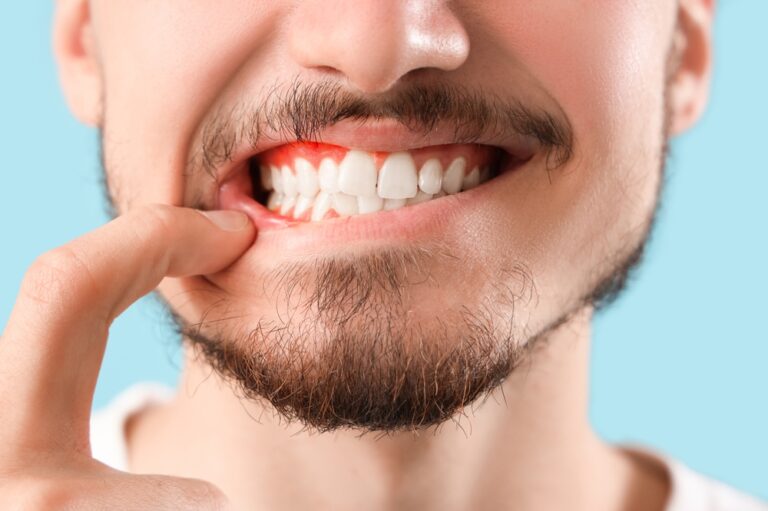
- A red cut inside your lip
- A white or yellow sore
- Bruising
- Blood
- A hard little bump
- A blister
If you notice a bump that just won’t go away, pay attention—it could mean something more.
How Long Does It Take to Heal?
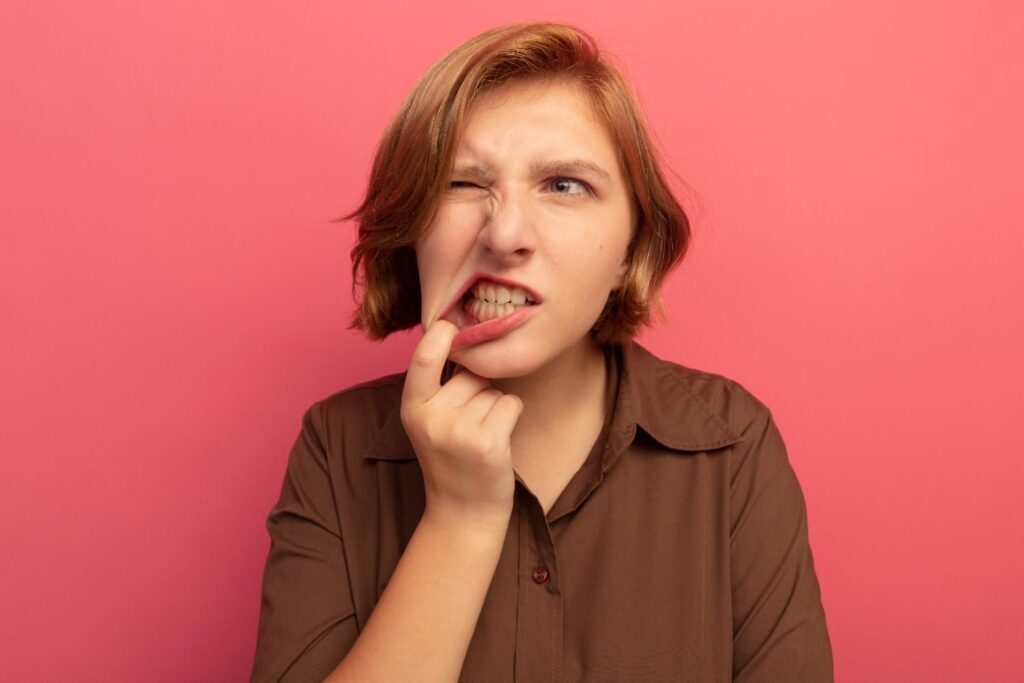
Most of the time, your lip heals up in about five to ten days. Mouth wounds actually heal faster than skin, so minor bites usually get better pretty quick.
But healing drags out if you keep biting the same spot, the area gets infected, you smoke, or your immune system isn’t great.
People always ask, “How long does it take for a lip bite to heal?” If it still hurts after two weeks, it’s time to get it checked.
Can Biting Your Lip Cause a Canker Sore?
Sometimes, yes. Repeated biting can mess up the tissue and set off a mouth sore. You might notice you get a canker sore every time you bite that spot, or just a painful sore inside your lip.
Canker sores aren’t infections, though, and you can’t pass them to anyone else.
Home Remedies for Biting the Inside of Your Lip
If you’ve bitten the inside of your lip, you’re not alone. It hurts, it’s annoying, and it usually heals up fast—but you can help it along.
1. Salt Water Rinse
It’s classic, and it works. Mix half a teaspoon of salt into some warm water, then gently swish it around your mouth two or three times a day. This keeps the wound clean and helps cut down on bacteria.
2. Ice for Swelling
Ice is your friend here. It helps with pain, swelling, even bruising. Just wrap some ice in a cloth (don’t put it right on your skin), and hold it against your lip for about ten minutes. Do this a few times a day.
3. Honey—Yes, Really
Honey speeds up healing. Dab a little raw or medical-grade honey on the sore. Some people also mix honey with a pinch of turmeric to help with inflammation. Give it a shot.
4. Over-the-Counter Oral Gels
Look for gels meant for mouth ulcers or lip injuries. They act like a bandage for your sore spot and can take the sting out while you heal.
5. Avoid Foods That Make It Worse
Skip spicy foods, citrus, crunchy snacks, and hot drinks until your lip feels better. They just make things sting more.
How to Clean the Inside of Your Mouth Safely
You want to keep things clean without making it worse. Forget scrubbing. Instead, stick with gentle saltwater rinses, an alcohol-free mouthwash, and a soft toothbrush. Stay away from hydrogen peroxide every day—it actually slows healing.
If Your Lip Is Swollen or Bleeding
Bleeding? Press a clean cloth or tissue on the spot for ten minutes. Don’t keep peeking—just hold steady. Most bleeding stops pretty quickly this way.
Swelling? Go back to ice, and you can try an anti-inflammatory gel. And whatever you do, don’t bite it again. Lips bleed a lot, but pressure usually handles it.
Bit Your Lip and Now There’s a Hard Lump?
A lot of people get nervous about this. The most common reason is a mucocele—a harmless mucus cyst. It shows up after repeated biting or when a salivary gland gets blocked. Usually, it feels like a soft or firm bump on your inner lip, doesn’t hurt, and goes away on its own in a few weeks.
But if it hangs around for more than three or four weeks, gets bigger, hurts, or starts bleeding for no reason, go see a doctor.
Watch for Infection
Most of the time, bitten lips don’t get infected. Still, watch for warning signs like more pain, thick yellow or green discharge, fever, spreading redness, or a nasty smell. If you notice any of these, talk to a doctor.
How to Stop Biting Your Lips
Breaking this habit is tough, but doable.
Try chewing sugar-free gum, keep your lips smooth with balm, and pay attention to when you’re most likely to bite (stress, boredom—those are big ones). If it’s anxiety-driven, deep breathing or fidgeting with something in your hands can help you break the cycle.
Biting While Eating?
If you keep biting your lip when you eat, ask your dentist to check for sharp teeth or alignment problems. Sometimes a little dental fix makes a big difference.
When to See a Doctor
Check in with a dentist or doctor if a lip cut won’t heal after two weeks, if you get ulcers in the same spot again and again, if a lump doesn’t shrink, or if you have serious swelling or signs of infection.
Final Thoughts
Lip biting happens—more often than people admit. Most of the time, it heals up on its own, but if you keep biting the same spot, ignore wounds, or let stress take over, you can turn something small into a bigger headache.
Don’t wait—take care of it early, break the habit, and listen to your gut if something feels off. Your mouth heals fast, as long as you give it a chance.
Medical Disclaimer
This article shares information for educational purposes—it’s not medical advice, diagnosis, or treatment. If you have health questions or concerns, talk to a qualified healthcare professional. Don’t ignore or put off professional advice because of anything you read here.