
Notice your shoes feel tighter or your socks are leaving deeper marks than usual? If you have diabetes, don’t brush off swollen feet. It’s common for people with Type 1 and Type 2 diabetes to deal with swelling — but that doesn’t make it harmless. Swelling (edema) often shows up because of poor blood flow, nerve issues, kidney trouble, medication side effects, or just plain old high blood sugar.
Sometimes the swelling’s pretty mild and goes away. But if it sticks around, it’s your body waving a red flag: you need to pay attention.
What Is Diabetic Edema?
Diabetic edema means swelling from fluid building up in your tissues. It usually hits the feet, ankles, or legs, but your hands or even your face can swell, too. Sometimes just one foot swells up, other times it’s both.
Are Swollen Feet a Sign of Diabetes?
People wonder all the time: “Are swollen feet always a sign of diabetes?” Well, not always. Swollen feet on their own don’t mean you have diabetes. But, diabetes can make swelling worse or more likely, since it messes with your blood vessels, nerves, kidneys, heart health, and how your body handles fluids.
If you’ve got swollen feet, plus other symptoms like nonstop peeing, drinking all the time, blurry vision, constant tiredness, or wounds that heal slowly, it’s time to get your blood sugar checked.
How Does Diabetes Lead to Swollen Legs and Feet?
Several things can cause swelling when you have diabetes.
1. Poor Circulation
Chronically high blood sugar slowly damages blood vessels. Circulation slows, blood pools in the lower legs, and fluid leaks into nearby tissues — your feet and ankles puff up.
2. Diabetic Neuropathy
When your nerves get damaged, it messes with everything. You start to lose feeling, your blood flow changes, and inflammation ramps up. That combo? It usually makes your feet swollen and miserable.
3. Kidney Disease
Diabetes is one of the top reasons kidneys fail. When kidneys can’t get rid of extra fluid, it gets trapped in your body — legs get puffy, but sometimes your face swells, too.
4. Heart Problems
Diabetes raises your risk for heart disease. If the heart can’t pump efficiently, fluid backs up in the feet, ankles, and lower legs. Swelling sticks around and can get worse over time.
5. High Blood Sugar
Long stretches of high blood sugar make inflammation worse, stress blood vessels, and encourage your body to hold on to fluid. That’s why puffy feet and ankles sometimes track right along with your glucose numbers.
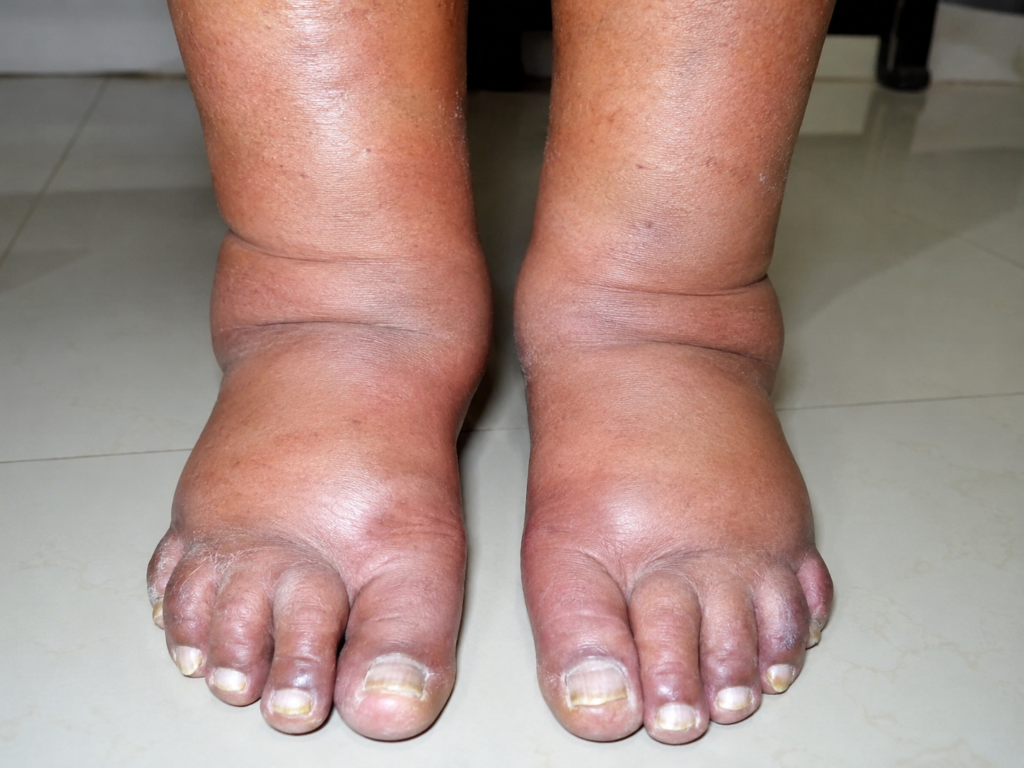
What Causes Foot Swelling in Diabetes?
A handful of common reasons include:
- Out-of-control blood sugar damaging tissues and vessels
- Failing kidneys leading to water retention
- Heart failure (poor circulation)
- Obesity (extra pressure on veins)
- Infections (especially with slow healing)
- Injuries (which you might not feel due to neuropathy)
- Medication side effects
Can Diabetes Medication Cause Swelling?
Yes, some meds make it worse.
Insulin sometimes causes the body to hold on to sodium and water for a little while — so you might notice mild swelling, especially after you begin injections or raise your dose. If the swelling’s more than mild, or bugs you, talk to your doctor.
Metformin rarely causes swollen feet, but if you notice swelling soon after starting it, bring it up at your next appointment. Never just stop a medication without calling your healthcare provider.
What Does Swollen Diabetes Feet Look and Feel Like?
Watch for these signs:
– Puffiness in the feet (and sometimes legs or hands)
– Tight or shiny skin
– Trouble fitting into your normal shoes
– Marks from socks or shoes
– Stiffness or heaviness in the legs or feet
Sometimes, swelling comes with numbness, tingling, burning, or pain — especially if nerves are involved.
Swelling that’s also red, hot, painful, or comes with a fever or open wound means you should call your doctor right away.
A Swollen Big Toe and Diabetes:
You don’t mess around with a puffy, painful big toe if you have diabetes. It could be something simple like an ingrown nail or gout, but it might also be an infection, injury, or early signs of a diabetic foot problem. Red, warm, and sore toe? Call your healthcare provider.
Type 2 Diabetes and Swollen Feet
Type 2 diabetes often walks hand in hand with swelling, usually because of obesity, poor blood circulation, kidney issues, or heart problems. Managing blood sugar well reduces your risk a lot.
Can Prediabetes Cause Swelling?
Prediabetes doesn’t usually cause swollen ankles or feet directly — but extra body weight, slow circulation, and inflammation can all contribute. Bottom line: if you spot swelling, even before a diabetes diagnosis, it’s worth seeing the doctor.
Gestational Diabetes and Swollen Feet
Pregnancy naturally leads to more fluid retention (hello, swollen feet). If you have gestational diabetes, you’re at a higher risk for swelling and circulation problems. Any sudden or severe swelling during pregnancy should be checked out right away.
Home Remedies for Diabetes Swollen Feet
Looking for ways to shrink swelling safely?
– Put up your feet: Kick back with your feet above heart level for 20–30 minutes
– Gentle exercise: Walking, swimming, or cycling helps boost blood flow
– Compression socks: These can work wonders — but if you have bad circulation, get the okay from your doctor first
– Cut down salt: Skip processed foods, fast food, and heavy snacks
– Drink plenty of water: Staying hydrated actually helps your body let go of extra fluid
– Tighten up blood sugar control: Better control usually means less swelling
How to Deal With Water Retention
– Keep blood sugar steady
– Move your body every day
– Lose weight if you need to (helps veins do their job)
– Limit alcohol
– If you have kidney problems, stick to your specialist’s diet plan
Foot Care Tips for People With Diabetes
Check your feet (top, bottom, and between the toes) every day. Look for swelling, blisters, redness, sores, cracks, or nail trouble. Wash and moisturize your feet daily. And don’t go barefoot — ever.
Diabetic Slippers for Swollen Feet
Wearing the right shoes matters. Look for slippers with extra width, adjustable straps, soft interiors, non-slip soles, and good support. Good footwear lowers your injury and blister risk.
When Is Swelling an Emergency?
Don’t wait—get help right away if the swelling comes with any of these:
- Chest pain
- Difficulty breathing
- Sudden or intense redness
- Fever
- Swelling that pops up fast on just one side (could mean a blood clot)
- Rapid weight gain
- Open wounds or patches of black skin
Those symptoms aren’t just annoying—they can point to an infection, clot, heart problems, or a diabetic crisis.
Keeping Feet and Legs from Swelling
The basics matter: control your blood sugar, move around, maintain a healthy weight, eat well, see your doctor consistently, and check your feet every day. Staying ahead of it really helps.
Frequently Asked Questions
Q. Can diabetes cause edema?
Definitely. Swelling often comes from kidney issues, damaged blood vessels, certain meds, or just not keeping your blood sugar in check.
Q. Does diabetes cause swelling in the legs?
Yes—it’s pretty common. When blood flow, kidneys, or your heart start to struggle, your legs are often the first to show it.
Q. Can high blood sugar cause your face to swell?
It can, especially if you’re dealing with fluid retention or kidney issues.
Q. Is swelling a guaranteed sign of diabetes?
Not always, but it’s more likely when other symptoms like thirst, urination, and fatigue show up.
Q. Why do my socks leave deep marks?
Usually, it means you’re holding onto extra fluid. Persistent marks are worth talking to your doctor about.
Conclusion
Swollen feet and diabetes are closely linked, but swelling deserves your attention. Most cases improve with better blood sugar control, more movement, and treating the cause. The sooner you spot and deal with swelling — especially with redness, pain, or sudden changes — the better your odds of keeping your feet healthy.
References
- Healthline – Diabetes and Swollen Feet
- Centers for Disease Control and Prevention (CDC)
- National Institute of Diabetes and Digestive and Kidney Diseases (NIDDK)
- American Diabetes Association (ADA)
- Mayo Clinic – Diabetes Symptoms and Causes
- NHS – Diabetes
- CDC – Gestational Diabetes
Medical Disclaimer
This article shares information for educational purposes—it’s not medical advice, diagnosis, or treatment. If you have health questions or concerns, talk to a qualified healthcare professional. Don’t ignore or put off professional advice because of anything you read here.