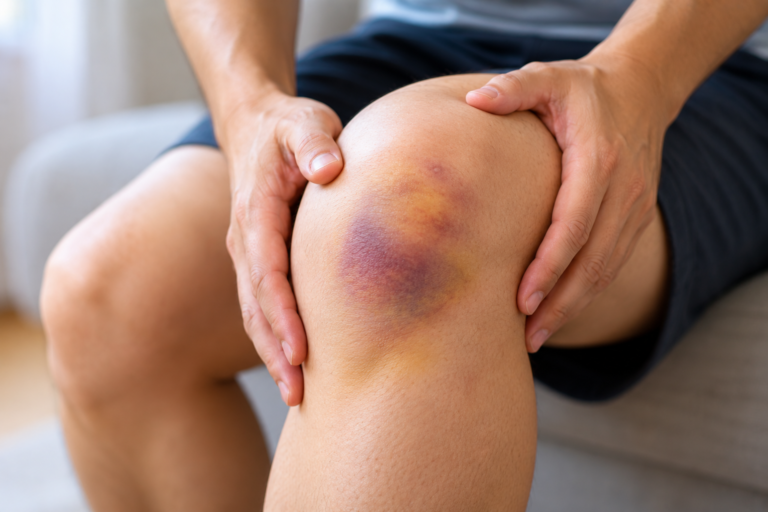
You twist your foot during a walk, slip on a patch of water, or finish a workout and feel a sudden, sharp pain. At first, you shrug it off as just a sprain. But a few hours in, the pain gets worse, the area starts to swell, and it’s almost impossible to put weight on it.
Is it just a sprain, or could it actually be a hairline fracture?
Lots of people brush off this kind of injury because there’s no dramatic bend, no bleeding, nothing that looks obviously broken. But a hairline fracture is still a real fracture—a broken bone—and ignoring it can cause bigger problems down the line. Left untreated, that tiny crack can grow larger, take ages to heal, or set you up for more serious issues later on.
What Exactly Is a Hairline Fracture?
A hairline fracture is exactly what it sounds like—a tiny, thin crack in the bone. Doctors sometimes call these “stress fractures,” especially if the crack comes from repeated pressure, not a sudden hit or twist.
Hairline Fracture vs. Stress Fracture: What’s the Difference?
| Hairline Fracture | Stress Fracture |
|---|---|
| Usually refers to a small, visible crack in a bone. | Develops gradually due to repetitive stress on the bone. |
| Often occurs after a sudden injury or accident. | Commonly caused by repeated activities such as running or jumping. |
| Pain usually starts immediately after the injury. | Pain develops slowly and worsens over time with continued activity. |
| Often linked to a specific incident, such as a fall or twist. | Usually occurs without a single identifiable injury. |
| Appears as a fine crack on imaging tests. | May also appear as a fine crack on X-rays or MRI scans. |
Who Gets Hairline Fractures?
Anyone can get a hairline fracture, but your chances go up if you:
- Run or play sports frequently
- Suddenly ramp up your workout
- Have osteoporosis
- Aren’t getting enough vitamin D or calcium
- Smoke
- Wear old, beat-up shoes
- Spend a lot of time on your feet
How Do Hairline Fractures Happen?
There’s more than one way to crack a bone, but here are the main players:
1) Repetitive Stress
Think long-distance running, basketball, dancing, hiking, or military training. Doing the same pounding movements over and over gradually weakens the bone until—snap—a small crack forms.
2) Sudden Injury
You fall down the stairs, twist your ankle, slip on ice, get hit in a game, or are in a car accident. One wrong move is all it takes.
3) Bones Weakened by Health Problems
Certain conditions make fractures more likely: osteoporosis, being low on vitamin D or calcium, eating disorders, or years of steroid use all make bones more fragile.
4) Too Much, Too Fast, Not Enough Rest
Bones actually repair tiny bits of damage after activity. If you push hard every day and skip rest, the damage piles up faster than your body can fix it.
So, what does a hairline fracture actually feel like?
Honestly, it can fool you. The pain feels a lot like a sprain or a deep bruise, so it’s easy to miss. Still, a few things stand out:
- The pain gets worse when you move.
- You feel sore if you press on one specific spot on your bone.
- The area might swell or have some mild bruising.
- It’s tough to walk or use that part of your body.
- Rest makes the pain fade, but as soon as you’re active again, it’s back.
- You lose some range of motion or strength there.
So, how do doctors figure out what’s going on?
Since a hairline fracture looks a lot like other injuries at first, doctors rely on imaging tests to be sure. Usually, they’ll start with an X-ray — though honestly, these tiny cracks can be hard to spot at first. If X-rays don’t show much but you’re still hurting, an MRI can pick up smaller stress injuries. Sometimes, a CT scan gives them the crystal-clear picture they need.
On top of that, your doctor will want to know what happened, look for swelling and tenderness, and see how well you can move the injured area.
What Does the Pain Feel Like?
Most people say it’s a sharp, deep ache or sometimes a stabbing or throbbing pain—especially if you put weight on it. Some feel a weird burning or needle-like sting. Press on the injured spot, and the pain jumps.
Can You Always Tell If You Have a Hairline Fracture?
Not by looks alone. To figure it out, ask yourself:
– Is the pain in a very specific spot?
– Does it get worse with walking?
– Does rest help?
– Is there swelling?
– Does the pain always come back with activity?
– Did it start after a fall or lots of repeated exercise?
If you nodded “yes” to a few, it’s time see a doctor.
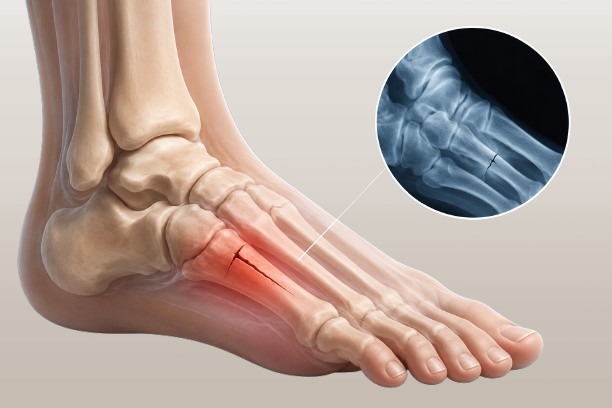
What About Hairline Fractures in the Foot?
Feet take a beating, so they’re a frequent target for hairline cracks. Watch for:
- Pain on the top or side of your foot
- Swelling or tenderness over one bone
- Limping
- Pain that fades with rest but comes roaring back during activity
Yes, you can usually wiggle your toes even if your foot has a crack. That doesn’t mean it’s not fractured. If you’re active or run regularly, you may also find our guide on common runners’ foot injuries helpful.
Hairline Fractures by Body Part
Foot: Hurts to walk, may swell, sore on one side or on top.
Ankle: Pain standing, swelling, bruising, and difficulty moving it.
Wrist: Pain when gripping things, swelling, weakness, pain twisting.
Hand: Hurts to make a fist or grip objects, swelling, tenderness.
Arm: Soreness with lifting, swelling, limited twist.
Leg: Pain when walking, running, or jumping.
Treating a Hairline Fracture
Treatment depends on where the crack is, how bad it is, and your overall health. Nearly all hairline fractures heal without surgery.
The “big” tips:
- Rest the area—no pain, no gain here
- Skip activities that hurt
- Ice it for the first day or two to keep swelling down
- Elevate the limb if you can
- Brace, boot, splint, or cast if your doctor says
- Don’t go back to full activity until your doctor clears you
Pain meds can help, but listen to your doctor on what and how much to take. Most important: Give your bone time. Going back to sports or heavy work too soon can set you back weeks (or worse).
How Long Does It Take to Heal?
Most healthy adults are back to normal in 6 to 8 weeks, though a few will heal faster or slower. Healing time depends a lot on:
– Which bone is cracked
– Age and overall health
– If you keep weight off the area
– Whether you smoke
– Your nutrition
– How soon you start treatment
Here’s a rough guide by body part:
| Body Part | Average Healing Time |
|---|---|
| Foot | 6–8 weeks |
| Ankle | 6–10 weeks |
| Wrist | 6–8 weeks |
| Hand | 4–8 weeks |
| Thumb | 4–6 weeks |
| Finger | 3–6 weeks |
| Forearm | 6–8 weeks |
| Arm | 6–10 weeks |
| Shin (Tibia) | 8–12 weeks |
| Femur | 3–6 months |
| Knee | 8–12 weeks |
| Heel | 6–10 weeks |
Remember—everyone’s different. Some heal faster, some take longer.
Can a Hairline Fracture Heal on Its Own?
Yes—if you protect it. If you ignore it and keep pounding away, the crack can spread.
How Can You Help Your Healing?
Rest: Take it seriously. Avoid anything that makes it hurt more.
Protect the Area: Boots, casts, braces, or crutches might be needed—let your doctor decide.
Eat for Healing: Calcium and protein are your friends: dairy, eggs, fish, leafy greens, beans, nuts. Protein helps repair damage, not just calcium.
Get Enough Vitamin D: It helps you use all that calcium. Try sun exposure, fatty fish, eggs, or fortified foods. If you’re low, you might need a supplement.
Stay Well-Hydrated: Water keeps everything working right.
Don’t Smoke: Smoking slows bone healing, period.
Listen to Your Doctor: Don’t take off a cast early or push through pain. Just because it feels better on the outside doesn’t mean it’s fully healed.
Can You Walk on a Hairline Fracture?
Some people can, but it’s not a good idea. Just because you’re able to limp around doesn’t mean the bone is fine. Walking on it can drag out healing, make the pain worse, or turn a small crack into a big break. Always follow your doctor’s advice.
How Do You Know When You’re Healed?
Pain isn’t the only clue. Watch for:
- No tenderness to the touch
- No pain during normal activities
- Normal walking or movement
- Strength coming back
- Imaging shows the bone is healed (if your doctor checks)
After the all-clear, go back to high-impact activities slowly.
How to Avoid Hairline Fractures
You can’t prevent every injury, but you can lower the odds:
- Increase activity slowly
- Wear good, supportive shoes; don’t wait till they’re falling apart
- Eat enough calcium, protein, and vitamin D
- Rest between tough workouts
- Mix in some resistance training to strengthen muscles
- Watch your weight
- Don’t smoke
- Pay attention to pain—don’t ignore it if it keeps coming back
When Should You Go to the Doctor?
Don’t wait it out if:
- Pain from an injury isn’t fading after a few days
- Swelling keeps getting worse
- Using the limb is really hard or painful
- Activity keeps bringing back pain or swelling
- You’re numb, tingly, or see a weird color in the area
- The limb looks deformed
- The pain is severe after a big fall or collision
Go to the ER if:
- The bone is sticking out, or you see heavy bleeding
- The limb can’t move, feels blue, cold or numb
- The pain is severe and sudden after major trauma
- Back to Exercise—When Is It Safe?
Common Questions
Q. Is a hairline fracture a broken bone?
Yes, it’s a small crack but still counts as a broken bone.
Q. How long does it take to heal?
Usually 6 to 8 weeks, but that depends on the bone, your age, and how well you follow treatment.
Q. Can I exercise with a hairline fracture?
Skip high-impact workouts until your doctor says it’s safe. Low-impact moves might be okay later.
Q. Does walking cause stress fractures?
It can, especially if you suddenly increase how much or how far you walk.
Q. What foods should I eat to heal?
Go for calcium, protein, and vitamin D. Dairy, fish, eggs, leafy greens, beans, nuts, and fortified foods are all good choices.
Q. Can kids get hairline fractures?
Definitely. Kids get them from sports, falls, or repetitive activity. Always have a suspected fracture checked by a professional.
Q. Are older adults more at risk?
Yes. Bone density tends to drop with age, especially if osteoporosis sets in.
Final Thoughts
Hairline fractures might look like small potatoes, but they’re nothing to brush aside. Because the crack is tiny, people often write them off as a simple sprain, but this only slows down healing or makes things much worse.
The bright side? Most hairline fractures heal up well with early diagnosis and a little patience. Give your body what it needs—time, good food, protection, and following medical advice—and you’ll be back to your usual routine soon enough.
If pain keeps coming back and something feels off, don’t ignore it. Get checked out and start healing the right way—your bones will thank you.
References
Medical Disclaimer
This article shares information for educational purposes—it’s not medical advice, diagnosis, or treatment. If you have health questions or concerns, talk to a qualified healthcare professional. Don’t ignore or put off professional advice because of anything you read here.