If you’ve eaten sushi or a poke bowl, you’ve seen those bright, tiny eggs scattered on top. They’re crunchy, a little salty, and honestly make the whole dish stand out. That’s masago.
What’s Masago?
Masago is simply the eggs (roe) of a small fish called capelin. This is a type of smelt that swims in cold waters, which is why you might also hear people call masago “capelin roe,” “smelt eggs,” or just “tiny fish eggs.”
So, in plain terms: masago = small, edible fish eggs from capelin. Sometimes people misspell it—massgo, masaggo, masagi—but it all means the same thing.
What’s in Masago?
You aren’t just getting plain fish eggs—the masago you find at restaurants usually has a few extras mixed in, like salt and food coloring (for those bright orange, red, or sometimes green vibes). Sometimes there’s sugar or soy sauce, maybe a preservative so it lasts longer. But at its core, it’s mostly natural capelin eggs with some added flavor and color.
What Does Masago Taste Like?
It’s got its own thing going on—salty, just a touch sweet, with a mild seafood flavor that isn’t overpowering. The real draw? That crunchy texture that people can’t seem to get enough of.
Masago in Sushi
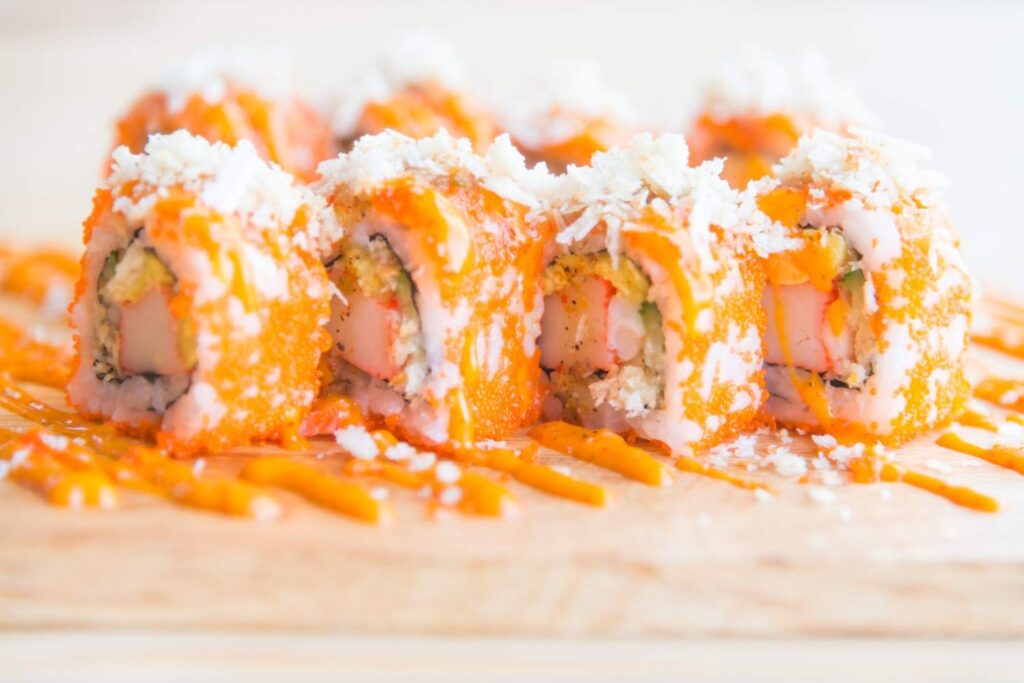
If you eat sushi, you’ve definitely seen masago. It gets sprinkled on top, rolled inside, used as a garnish, or even added to spicy mayo sauces. It’s there for the crunch, a salty punch, and a splash of bright color.
Same goes for poke bowls: masago brings a pop of seafood flavor, a fuller bite, and another layer of color.
Masago vs Tobiko vs Caviar
People often mix these up. Let’s break them down:
Masago
Masago comes from capelin and is smaller, softer, and usually cheaper than the bright, crisp tobiko (which comes from flying fish).
Tobiko
Tobiko is crunchy and showy; masago is a little more affordable and mild.
Caviar
Then there’s caviar, which comes from sturgeon and is typically big, rich, and expensive. Think fancy party food.
Nutrition
One tablespoon of masago has about 40 calories, 3 to 4 grams of protein, 2 to 3 grams of fat, 1 gram of carbs, and quite a bit of sodium. Masago’s a decent source of protein, omega-3s, vitamin B12, and selenium—nutrients your body will thank you for.
Calories/Health
The good news: masago is low in calories, so it fits in if you’re watching what you eat. Just keep an eye on the salt.
Is Masago Healthy?
Yeah, in reasonable amounts. It supports your brain, is good for your heart (thanks to the omega-3s), helps with energy, and packs protein. Basically, fish roe—whether it’s salmon eggs, smelt roe, or capelin eggs—is pretty nutritious. The main thing to be cautious about is the sodium and cholesterol.
Is Masago Keto-Friendly?
Absolutely. It’s low in carbs and high in fat and protein, which is what keto folks are after. Just don’t overdo the portions.
Is It Cooked or Raw?
Usually, masago is cured (salted) but not cooked in the way a steak is cooked. It’s not totally raw either, so it’s safe to eat in sushi.
Is Masago Spicy?
On its own, not at all. But if you get masago mixed into sauces or paired with spicy ingredients, it can have a kick.
Masago Sauce
This crowd-pleaser usually combines masago with mayo, chili sauce, and soy sauce—creamy, a bit spicy, and super popular.
Pregnancy Safety
If you’re pregnant, be cautious. Masago is salty and, if not handled properly, could have bacteria. Doctors often say to skip raw or semi-raw seafood during pregnancy. Best bet: check with your doctor or stick with pasteurized, safer options.
Does Masago Go Bad?
Yep—just like anything else. If it smells funky, feels slimy, or the color’s off, it’s no good. Keep it in the fridge, use it up in a few days after opening, or freeze it if you need to keep it longer.
Price
Masago isn’t bank-breaking. In fact, it’s often cheaper than tobiko and way more budget-friendly than caviar.
Quick Recipe
If you want to make a quick masago bowl at home, lay some rice in a bowl, top it with avocado and cucumber, splash a little soy sauce, then drop a generous spoonful of masago on top. Simple and really tasty.
Masago vs Salmon Eggs
Masago is tiny and light. Salmon eggs (ikura) are huge, juicy, and richer, with higher omega-3s and a much bigger mouthfeel. Sometimes you want bold, sometimes you want subtle.
Other Variations
You might see green masago (wasabi-flavored), black masago, or red and orange versions. Masago pops up in all kinds of dishes—fish balls, noodle toppings, creative appetizers.
Is Roe Healthy?
Generally, yes—fish roe is rich in good fats and protein. They pack a salty punch, so don’t go overboard—just a little does the trick.
Final Thoughts
Masago looks small, but it really delivers when it comes to flavor and nutrition. It’s the ingredient that turns a simple bite of sushi into something craveable with just the right amount of crunch and color. Enjoy it in moderation, especially if you’re watching salt or you’re pregnant. Otherwise, dig in—it’s one of the reasons sushi can feel a little special.
Medical Disclaimer
This article shares information for educational purposes—it’s not medical advice, diagnosis, or treatment. If you have health questions or concerns, talk to a qualified healthcare professional. Don’t ignore or put off professional advice because of anything you read here.