If you’ve ever felt that sharp sting or deep ache along the front of your lower leg after a run, a long walk, or just being on your feet all day, you’re definitely not alone. That pain’s usually shin splints—annoying but common. The upside? You can tackle it head-on with a few simple shin splint stretches and tweaks to your routine. You’ll recover faster, hurt less, and make sure the pain doesn’t sneak back up on you.
What Are Shin Splints?
Shin splints, or medial tibial stress syndrome, bring pain along your shin bone, right down the front of your lower leg. This happens when the muscles, tendons, and bone around your shins get pushed too hard.
Common causes? There’s a bunch:
- Running on pavement or hard ground
- Jumping into tough workouts too quickly
- Calf muscles that are tight as guitar strings
- Weak muscles along your shins
- Old, worn-out shoes
Here’s something a lot of people miss: tight calves can actually start this whole mess. That’s why stretching matters so much.
Why You Need Shin Splint Stretches
Stretching for shin splints isn’t just something athletes do—it helps everyone by:
- Loosening tight muscles
- Getting more blood flowing down to your shins
- Cutting down pain
- Helping your shins heal faster
- Stopping injuries before they start
your lower leg muscles are yanking on your shins, making them cranky. Stretching helps your muscles relax and gives your shins a break.
The Best Shin Splint Stretches
Check out these top stretches and exercises—they work fast if your shins are acting up.
1. Toe Drag Stretch
Perfect for loosening up the front of your shins.
Here’s what to do:
Stand up straight.
Slide one foot back just a bit.
Drag your toes on the floor, lifting your heel.
Hold for 15–30 seconds.
You’ll feel that tibialis anterior open up—the muscle right down the front of your lower leg.
2. Seated Shin Stretch
Prefer to stretch sitting down? Try this.
How to pull it off:
Kneel with your toes pointing back.
Lower your hips onto your heels gently.
If you’re feeling too much stretch, lean forward a bit to take the edge off.
3. Calf Stretch (Wall Stretch)
Seriously, don’t skip this one—tight calves can wreck your shins.
Here’s how:
Put your hands against a wall.
Step one foot behind.
Keep your back heel pressed down.
Lean forward until your calf feels the stretch.
Your calves somehow pull on your shins a lot more than you’d expect.
4. Heel Walks
This gets you both a stretch and some strength.
Here’s the deal:
Stand and walk around on your heels, toes up off the floor.
Keep this going for 30 to 60 seconds.
You’ll wake those shin muscles up pretty quickly.
5. Resistance Band Shin Exercise
Great for strengthening your shins—so you hurt less later.
What to do:
Sit on the floor.
Loop a resistance band around your foot.
Flex your foot so you pull your toes toward you.
Stronger shins mean fewer injuries over time.
6. Foam Rolling
Foam rolling helps your shins recover faster.
Do it like this:
Put the roller under your shin.
Roll gently up and down.
Pause if you hit a sore spot.
Go slow—sometimes less really is more.
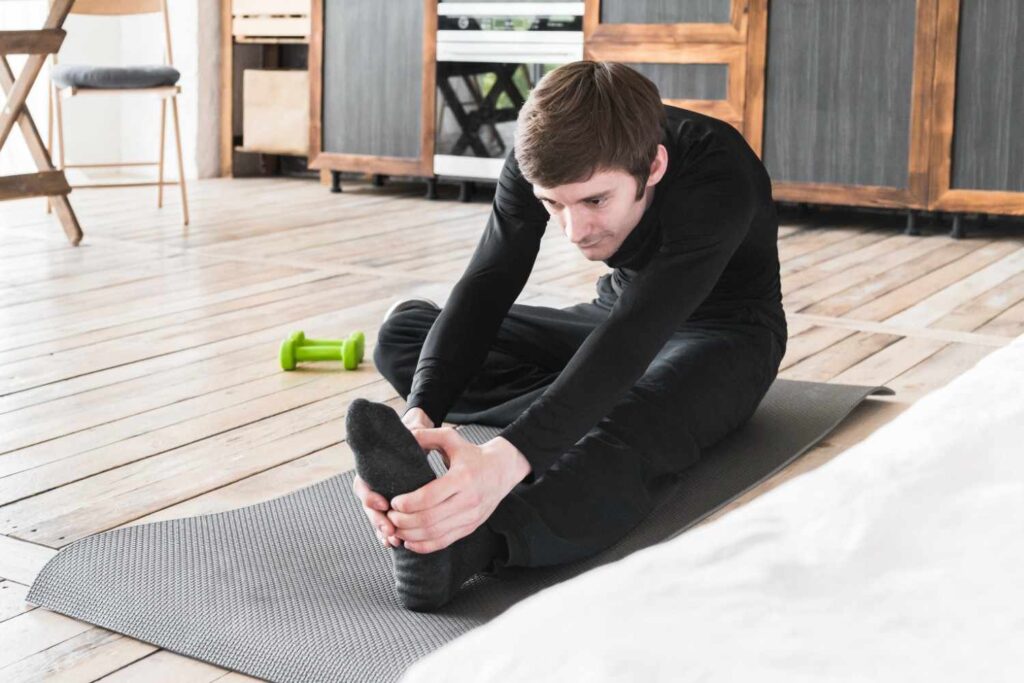
Simple Shin Splint Routine
Just keep it basic:
In the morning:
- Toe drag stretch, twice.
- Calf stretch, twice.
Before working out:
- Do a quick round of shin stretches.
- Always warm up—don’t skip it.
After a workout:
- A bit of foam rolling
- Seated shin stretch
Evening:
- Heel walks
- Resistance band exercise
Hit these daily and your shins will thank you.
Treating Shin Splints at Home
Most of the time, you don’t need a doctor. Here’s what works:
R.I.C.E. method:
- Rest
- Ice (15–20 minutes at a time)
- Compression
- Elevation
A few extras:
- Wear shoes with decent support
- Skip pounding the pavement for now
- Bump up activity slowly
- Massage along the shins—it really helps
For massage, just press gently along the sore area—a couple minutes is all you need.
Ice or Heat for Shin Splints?
Rule of thumb:
- Ice works best right when you’re sore or swollen
- Heat’s perfect a few days in, when things feel tight
Start with icing, then switch to heat as you heal.
Shin Splint Prevention: What Really Works
Staying ahead of shin splints is way easier than recovering from them. Try this:
- Stretch calves and shins every day
- Strengthen all those leg muscles
- Get a good pair of running shoes
- Add training slowly—don’t jump ahead
- Hit softer surfaces when you run
Mistakes That Make Shin Splints Worse
Here’s what not to do:
- Skipping your warm-up
- Training way too hard, too soon
- Brushing off early pain
- Wearing tired, old shoes
- Ignoring stretching (don’t do it!)
When It’s Time to Call the Doctor
Sometimes, it’s not just shin splints. See a doctor if:
- You’re in serious pain
- Nothing’s getting better
- You feel a sharp, pinpoint pain along the bone
Could be a stress fracture—don’t mess around with those.
Final Thoughts
Shin splints can really put a damper on your runs or workouts, but you’re not stuck with them. A few smart stretches, some simple care, and a little patience—and you’ll bounce back.
Start slow, stick with it, pay attention to how your legs feel. Strong, flexible muscles let you keep moving, pain-free.
Medical Disclaimer
This article shares information for educational purposes—it’s not medical advice, diagnosis, or treatment. If you have health questions or concerns, talk to a qualified healthcare professional. Don’t ignore or put off professional advice because of anything you read here.