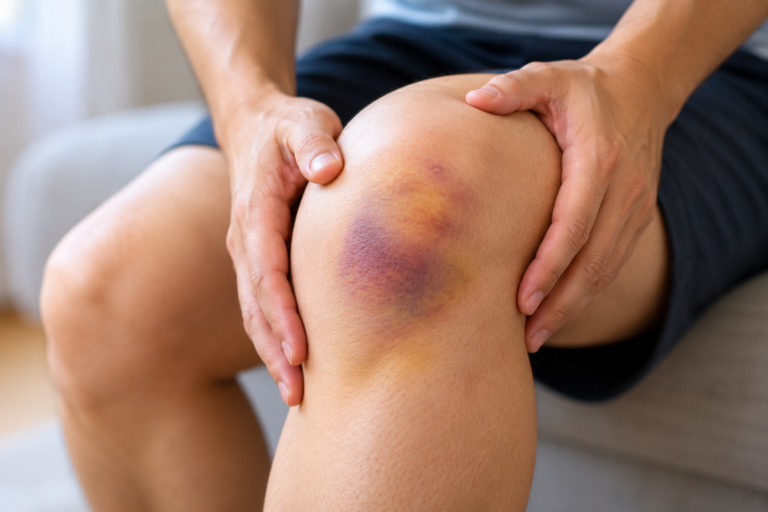
A bruised heel can throw a wrench into your daily routine. Suddenly, walking, standing, or working out might hurt a lot more than you’d expect. Sometimes you get sharp pain as soon as your heel hits the ground. Other times, there’s just a deep, nagging ache that gets worse if you stand for too long.
Typically, bruised heels develop if you land too hard on your feet, step on something sharp, or push your feet past their limits—like running on pavement or wearing shoes with little padding. The hurt can show up in the soft tissue under your heel, or even in the heel bone itself if the injury goes deep enough.
Most heel bruises get better with some time off your feet and a bit of basic care. Some stick around for weeks—or even months—depending on how bad things are. It’s also easy to confuse a simple bruised heel with more serious problems, like a bone bruise or an actual fracture, so it’s good to know what you’re dealing with.
What Is a Bruised Heel?
A bruised heel—sometimes called a heel contusion—just means you’ve managed to damage the tissue or bone in that area.
Underneath your heel, there’s a thick layer of fat padding. This cushion absorbs a lot of the shock when you walk, run, or jump. But when too much force hits your heel, little blood vessels and soft tissue get hurt. That leaves you with pain, swelling, soreness, and maybe even a bit of discoloration.
Usually, heel bruises show up in two main ways:
1. Heel Pad Bruise
This is when the fatty layer under your heel takes the hit. It often happens if you land hard, hop barefoot across a hard floor, or step on something small and sharp.
Typical signs:
– Pain right beneath your heel
– Tenderness if you press the sore spot
– Walking barefoot feels lousy
– Standing on hard surfaces makes things worse
2. Bruised Heel Bone
This is a deeper injury—the actual heel bone (calcaneus) takes a pounding, but doesn’t crack all the way through like a fracture.
What’s it feel like? You’ll get deep pain, swelling, and maybe even a persistent ache that doesn’t let up quickly. Unlike bruises in the soft tissue, this can stick around for weeks, sometimes longer.
What Causes a Bruised Heel?
Most of the time, a bruised heel is about too much pressure or impact in one spot.
Here’s how that usually happens:
1) Landing Hard on Your Heel
Jumping from even a short height, missing a step, or falling and landing heel-first can hit your heel hard enough to hurt. If it hurts after landing poorly, hold off on running or jumping until things feel better.
2) Running on Hard Surfaces
Pounding the pavement over and over, especially in worn-out shoes, adds up. Spiking your running mileage or skipping recovery days makes a bruised heel more likely and increases the risk of other running-related foot injuries
3) Stepping on Something Sharp
A single rock, LEGO, or piece of gravel can wreck your day. All your weight on one small spot puts big stress on the heel pad.
4) Wearing Bad Shoes
Thin soles, shoes with no cushioning, or walking barefoot for extended time on hard floors—all these put more stress on your heel with every step.
5) Sports and High-Impact Activities
Basketball, skateboarding, trail running—you name it. Anything with repeated jumping and landing can do the trick.
Bruised Heel Symptoms—What Does It Actually Feel Like?
The specifics depend on where and how badly you’re hurt.
For some people, it’s just a bit tender. For others, every step brings a shot of pain.
Most common things you’ll notice:
- Pain under or around the heel, mostly when you walk
- Swelling or puffiness
- Soreness to the touch
- Skin might look red, blue, or darker than usual
- Trouble walking comfortably
- Deep aches (especially with bone bruises)
Heel Pad Bruise Symptoms
Pain is right under the heel. Walking barefoot feels rough. Hard floors bring out the worst. If you put on padded shoes, you might feel better.
People often say it feels like there’s a pebble stuck under the skin.
Bruised Heel Bone Symptoms
This tends to be a deeper, more persistent pain. The area can swell, and standing or walking stays uncomfortable even after some rest. Sometimes there’s no visible bruise, but the ache is definitely there.
Is It Just a Bruise or Something Worse?
Pain in your heel isn’t always a simple bruise. It could be:
– A bruise in the fat pad
– A bone bruise
– A stress fracture (a small crack)
– A full fracture
How can you tell? Sometimes you can’t—at least not without help. Here’s a rough overview:
| Condition | Common Signs |
|---|---|
| Heel pad bruise | Pain and tenderness under the heel |
| Bone bruise | Deeper, aching pain, sometimes swollen |
| Heel fracture | Strong pain, lots of swelling, can’t stand or walk |
| Stress fracture | Pain that spikes with activity |
| Plantar fasciitis | Sore near the bottom of the heel, worse in the morning |
| Achilles tendinitis | Soreness at the back of the heel |
A bruise means the bone is intact, just banged up inside. A fracture is a crack or break. If you recently took a big fall and your pain is severe, or your heel looks bent out of shape, get to a doctor right away.
How Is a Bruised Heel Diagnosed?
When you show up with a heel injury, the doctor wants the story first. How did it happen? Where does it hurt? Can you walk at all? Next, they’ll poke around to check for sore spots, look for swelling or bruises, and see how much you can move your foot. If things aren’t clear yet, they might suggest a scan.
Here’s how the scans usually work:
- An X-ray spots broken bones or fractures, but it doesn’t always catch a bone bruise.
- MRI digs deeper, showing problems inside your bones and tissues — perfect for finding bruises.
- CT scan zooms in for a really detailed look at your heel, especially if the other tests leave questions.
After all this, the doctor pulls the info together and figures out what’s next, based on what they find.
How to Treat a Bruised Heel
Most of the time, you can handle a bruised heel at home—unless symptoms are severe.
1. Rest Your Heel
Don’t push through the pain. Give your heel a break from running, jumping, or long walks. Gentle movements are fine if they don’t hurt. If even regular walking is too much, back off and check with a doctor.
2. Use Ice
Ice helps with swelling and pain. Wrap an ice pack (or a bag of frozen veggies) in a towel, then hold it on your heel for 15–20 minutes. Take it off, let your skin warm up, and repeat as needed. Don’t put ice right on your skin.
3. Wear Better Shoes
Support and cushioning make a huge difference. Avoid walking on hard floors barefoot or wearing thin-soled shoes. Consider a cushioned insert or heel cup—just make sure it fits.
4. Elevate Your Foot
If you’ve got swelling, prop your leg up on a pillow when sitting or lying down.
5. Safe Pain Relief
If needed, use acetaminophen or ibuprofen (if you have no medical reasons to avoid them). Ask your pharmacist if you’re not sure what’s safe for you.
6. Walking Boot—Sometimes
In tough cases, a walking boot can take pressure off your heel. Not everyone needs one, though—a doctor can tell you if you do.
7. Heel Pads
Cushioned inserts help distribute weight. Stop using them if they make things worse.
Healing Time—How Long Does It Take?
Most people want to know: when can I get back to normal?
It depends on how bad the injury is and how much you rest your heel.
| Type of Injury | Typical Recovery |
|---|---|
| Mild pad bruise | 1–3 weeks |
| More painful pad bruise | A few weeks |
| Heel bone bruise | 4–6 weeks or more |
| Severe bone bruise | Sometimes months |
These are averages. Some people take longer, especially if they don’t stay off their feet.
What does healing look like?
- The first few days are rough—pain and swelling hit hard, so just take it easy and rest.
- After a week or two, things start to look up, especially if it’s a mild bruise. Walking gets easier.
- From two to six weeks, most regular bruises start feeling better, though you might notice a bit of tenderness sticking around. If you’ve got a bone bruise, it probably still aches.
- Once you get past six weeks, those deeper bone bruises can keep nagging you or might need some therapy to heal properly.
Don’t count on a disappearing bruise to mean you’re fully healed—what’s inside might still need recovery time.
How to Speed Up Healing
You can’t shortcut biology, but you can help things along:
- Stop high-impact activities until you’ve healed
- Stick with cushioned, supportive shoes
- Minimize long periods on your feet
- If you get advice or a walking boot from your doctor, follow orders
- Ease back into walking and exercise—go slowly
If pain flares up when you try more activity, scale back and talk to a professional.
If It Hurts Like a Bruise but There’s No Injury—What Gives?
Not every bruised-feeling heel is from obvious trauma. Other causes include:
- Plantar fasciitis (classic morning foot pain)
- Heel fat pad syndrome (the cushion itself is inflamed or breaking down)
- Heel bursitis (inflammation of a small sac near the heel)
- Stress fracture (tiny cracks from overuse, pain with activity)
- Nerve irritation (tingling, burning, or shooting pain)
If your heel hurts and you don’t remember hurting it, get it checked out.
When Should You See a Doctor?
Lots of minor heel bruises heal up at home, but sometimes you need more help.
Call your doctor if:
- You can’t walk or put weight on your foot
- The pain is severe, came after a fall, or the heel looks bent
- Swelling is getting worse or is dramatic
- The foot is numb, goes cold, or changes color quickly
Also, if heel pain drags on for more than two weeks, keeps coming back, or starts messing with your daily routine, make an appointment. If you have diabetes, don’t take any chances with new foot problems, especially swollen feet related to diabetes—get medical advice.
How Can You Prevent Bruised Heels?
You can’t avoid every accident, but you can tilt the odds in your favor.
- Wear supportive shoes with good pads, and swap out old running shoes
- Build up new exercise or running routines slowly
- Limit barefoot time on hard floors if your heels are sensitive
- Warm up before sports or high-impact workouts
- Give your feet time to recover between workouts
- Take heel pain seriously before it becomes chronic
Frequently Asked Questions
Q. How long do heel bruises last?
Mild bruises—1 to 3 weeks. Deeper bone bruises—several weeks, sometimes months.
Q. How long does it take for a stone bruise to heal?
A mild one can clear up in a few days to a couple of weeks. If it goes deep, it’ll need more time.
Q. Can you walk with a bruised heel?
Yes—if the pain is mild. But take it easy. If you can’t put weight on your foot, check with a doctor.
Q. Does a bruised heel show on an X-ray?
Usually, no. It will pick up fractures, but not bruising. MRI is better for bone bruises.
Q. Can a bruised heel cause swelling?
Absolutely. If swelling is major or keeps rising, get it checked.
Q. Can a bruised heel be confused with plantar fasciitis?
Yes, the pain location can be similar. Plantar fasciitis is often worse when you first get out of bed.
Q. Should I wear a walking boot for a bruised heel?
Only if a doctor recommends it. Most mild bruises don’t need that level of support.
Q. Can I run with a bruised heel?
Don’t run until you can walk pain-free. With bone injuries, wait until you get the all-clear from someone who knows what they’re doing.
Final Thoughts
A bruised heel is a hassle, but it’s usually not a life sentence. With rest, the right shoes, and a bit of patience, most people get back to normal. The key? Figure out exactly what you’ve hurt—skin, fat pad, bone, or something else. And don’t ignore pain that’s severe, lingering, or keeps getting worse.
Let your body heal, be smart about activity, and ask your doctor for help if things don’t start improving. Your feet will thank you.
References
- Healthline – Bruised Heel
- Banner Health – Common Causes of Painful Heel Bruises
- High Point Foot – Is My Heel Bruised or Broken?
- Cleveland Clinic – Bone Bruise
- NHS – Heel Pain
- AAOS – Calcaneus Fractures
Medical Disclaimer
This article shares information for educational purposes—it’s not medical advice, diagnosis, or treatment. If you have health questions or concerns, talk to a qualified healthcare professional. Don’t ignore or put off professional advice because of anything you read here.